Sarah Keshvani (Class of 2018): Using biology to tackle environmental challenges
 Aga Khan Academy Hyderabad alumna (Class of 2018), Sarah Keshvani is currently in her first year at the University of Victoria, Canada. She plans to major in either biological sciences, with a concentration in neuroscience or kinesiology, or biochemistry.
Sarah’s love for the sciences flourished during the Diploma Programme (DP) at the Academy in Hyderabad. Through her extended essay, she found the opportunity to learn more about how biology can provide solutions to modern challenges faced in local communities. She decided to tackle the issue of water shortages and soil nutrient deficiencies hindering large scale rice cultivation in the state of Telangana, leading to reduced crop yields. Due to zinc deficiencies in the soil, farmers resort to using huge amounts of fertilisers, which further degrade soil quality.
Sarah’s research centred on hydroponics as a possible solution to this problem. Plants are grown in water-based, nutrient solutions instead of soil.
“This technique has recently garnered a lot of attention because experiments have shown that growth is more than doubled when compared to traditional methods of agriculture,” Sarah explained. “Nutrient uptake is more efficient, and farmers can control the type of nutrients the plant is exposed to, in order to enhance different features of the yield. The use of water in hydroponics is still much more efficient than how it is used in open paddy fields that need to be covered in water during certain times of the crop cycle.”
 “I designed my semi-closed hydroponics system based on the deep water culture technique,” Sarah elaborated. “Instead of buying the nutrient solution, I made my own. I wanted to specifically observe and analyse the effect of zinc uptake on the plant’s overall health. So I used four different zinc concentrations, and for the fifth set of plants, zinc was not added at all. Data was recorded over the course of three weeks. The effect of zinc was analysed through five variables: shoot length, root:shoot ratio, chlorophyll content, biomass and relative water content percentage. The goal was to find out an optimal concentration of zinc from those four different concentrations.”
Sarah’s conclusions were positive. Rapid growth was observed and the flexibility to control the nutrient uptake played a huge role in optimal plant health. She realised that a closed system would have provided more accurate results, as the higher evaporation rates disturbed the pH levels. Overall though, she deduced this technique could definitely tackle the challenges faced by paddy farmers.
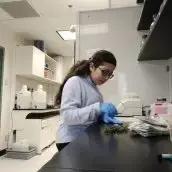 Sarah’s work with hydroponics was instrumental in securing her a role as a molecular biology research assistant at university. Her duties include assisting professors and doctorate students in their research; basic lab maintenance and keeping stocks; preparing bacterial and plant growth media; plant samples; and solutions for analysis. She also gets to work with graduate and PhD students on experiments involving nucleic acid isolation, amplification and cloning.
“The IB curriculum followed at the Academy has played a pivotal role in building many essential skills for university life,” Sarah reflected when asked how she has settled into this new phase. “The emphasis on academic integrity and independence have served me really well here. I was taught to think critically rather than blindly follow textbooks. Its skill-based learning approach, and connecting classroom learning to the real world, also prepared me well for higher education.”
Related Spotlights